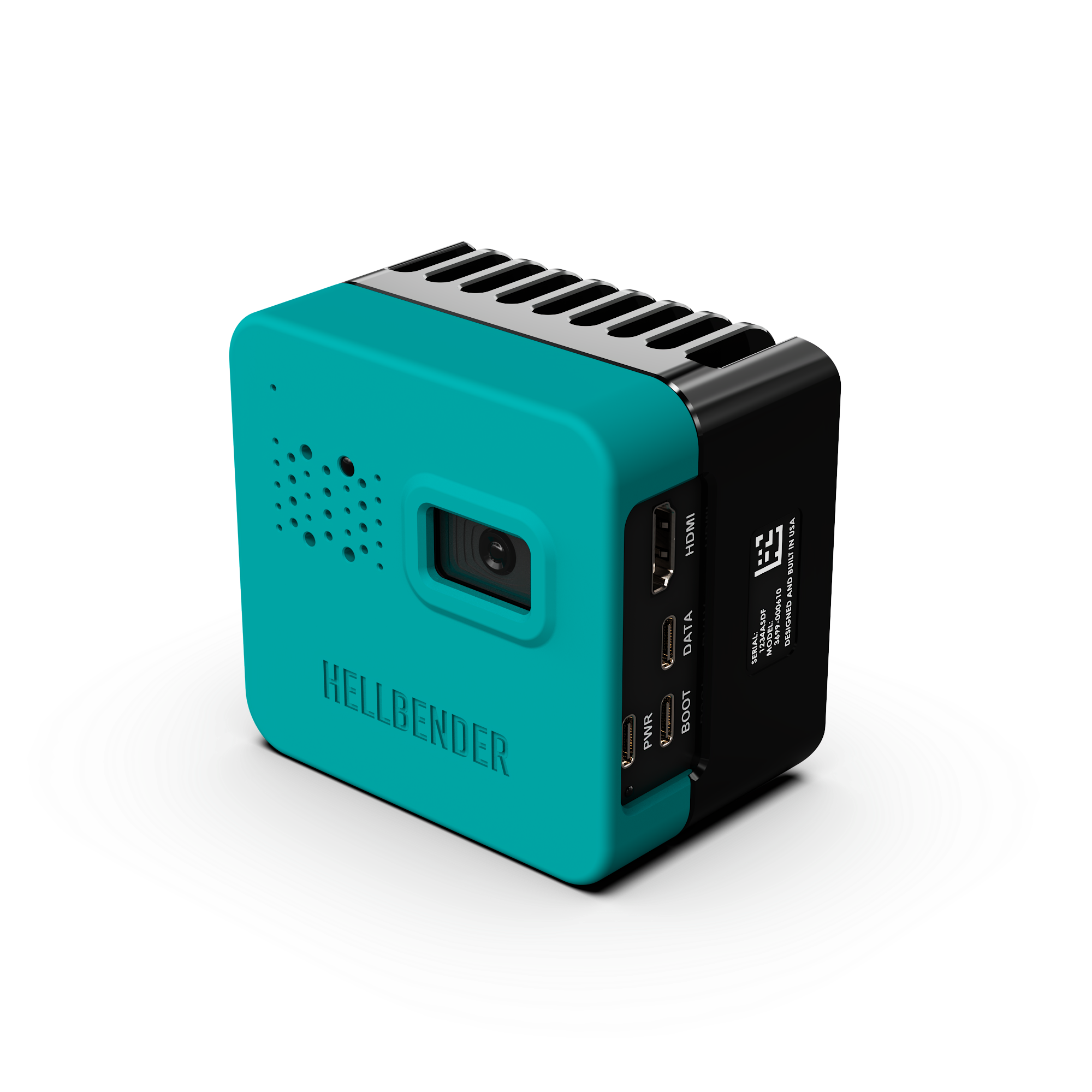
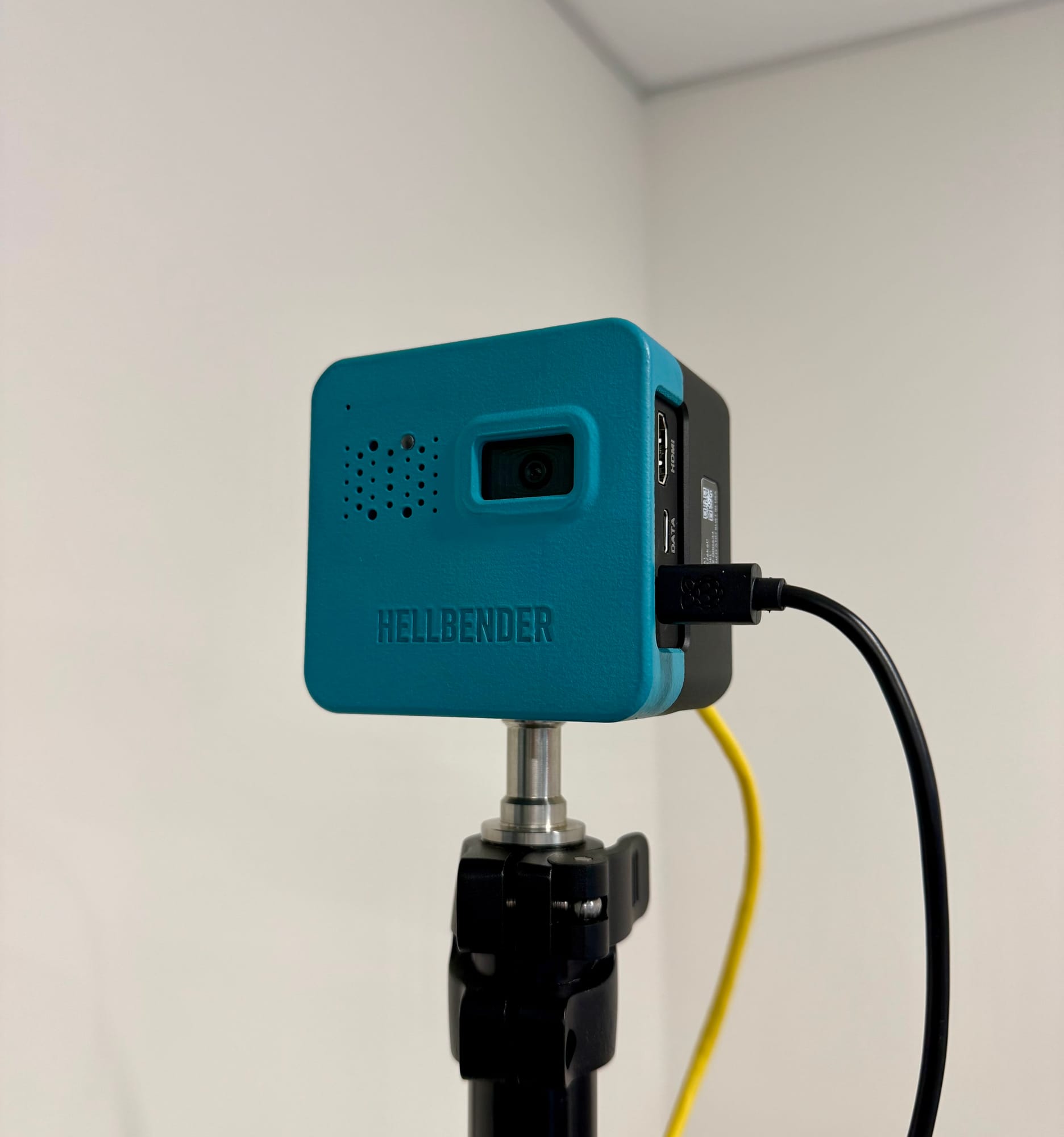
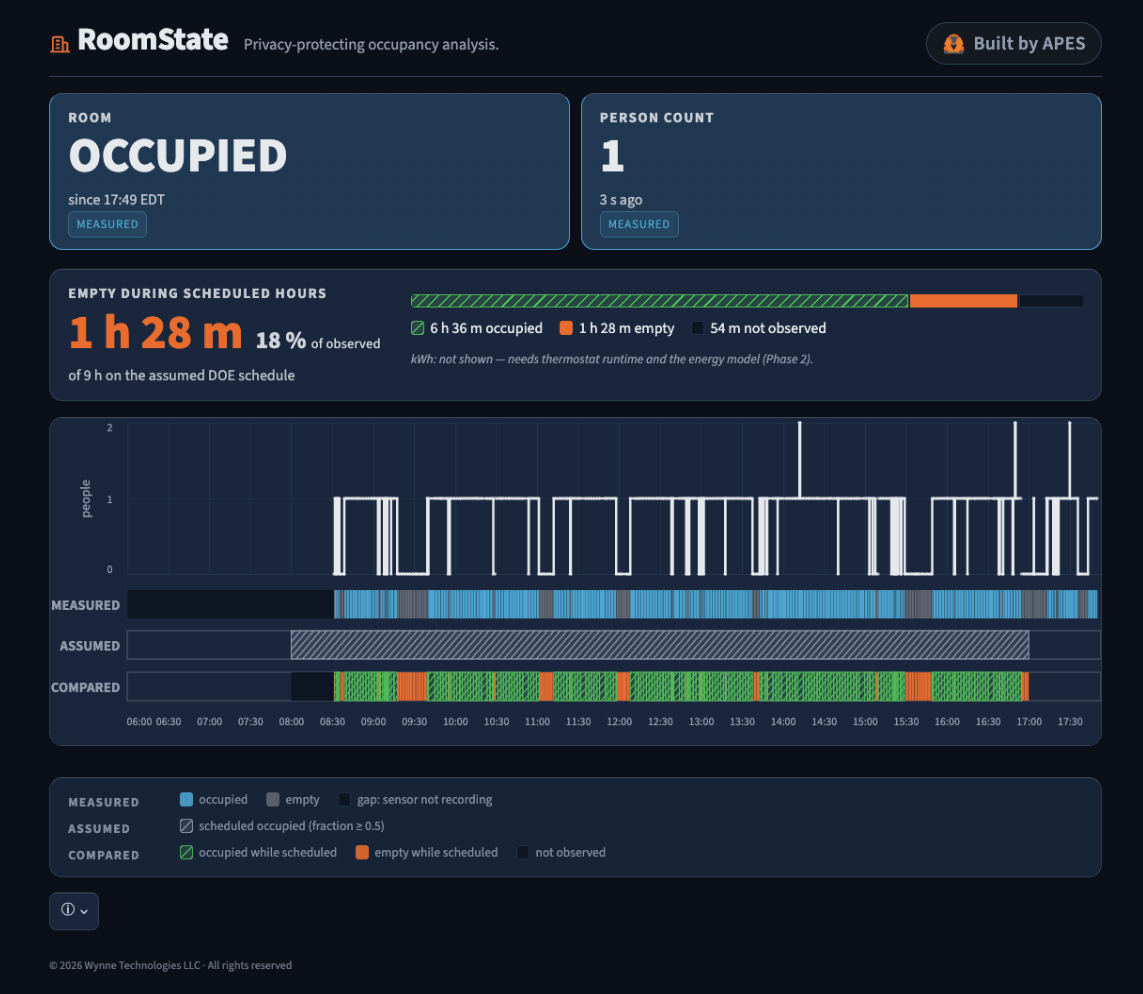
Wynne Technologies partnered with Hellbender to build RoomState, a privacy-protecting occupancy sensor on the Tendryl, turning a single edge AI camera into the data source facilities teams can use to efficiently manage their HVAC systems.
Wynne Technologies is an AI-first product engineering consultancy led by Adam Wynne, who previously directed the innovation accelerator at Bosch’s Azena camera platform. RoomState is Wynne Technologies’ camera-based occupancy sensor, built to give facilities managers the accurate data they need to build heating and cooling schedules around real usage instead of a fixed timetable.
Commercial buildings heat and cool rooms on a fixed schedule, regardless of occupancy, and traditional motion sensors don’t fix that problem. Passive infrared sensors miss people who sit still, can read a room full of people as empty a few minutes into a meeting, and can’t tell the difference between one occupant and nine. Wynne Technologies needed a vision platform that could solve what motion sensors can’t, while meeting a much higher bar for privacy since a camera, unlike a PIR sensor, is capable of capturing identifiable images of the people in the room. Key requirements included:
Working with the Tendryl — Hellbender’s integrated edge AI camera that combines a Raspberry Pi CM5 with a Hailo-8 AI accelerator — Wynne Technologies built RoomState as a single-device occupancy sensor with no second box to install. Hailo’s runtime, hailo-apps, and the Raspberry Pi camera stack arrived already installed and working together, and Hailo’s own detection demo ran live from the camera at over 26 frames per second with zero dropped frames on the first attempt. That headroom let Wynne Technologies run a full YOLOv11-large detector against a five-second sampling interval with room to spare, using standard Python tooling throughout: uv for packaging, the Pi camera stack for capture, Hailo’s runtime for inference, and Streamlit for the dashboard. No platform-specific code was required.
Privacy was enforced structurally rather than by policy: detections carry a class, bounding box, and confidence — no images, faces, names, or tracking across time.
Wynne Technologies had a stable, deployable proof-of-concept in ten days, including product definition, architecture design, and a full dashboard rebuild around a schedule-versus-measured comparison view.
Partnering with Hellbender let Wynne Technologies focus entirely on the RoomState application without integrating and fighting unfamiliar hardware. Wynne Technologies describes the Tendryl development experience as free of the surprises that often stall developers on other smart camera platforms, taking only ten days to build and deploy a fully engineered, privacy-verified proof-of-concept. With their initial problem now solved, RoomState now has a clear path to the room-level energy savings that motivated the project, and a hardware platform ready to support future enhancements.
Perception products that power physical AI.
Manufactured in the USA
© 2026 Hellbender. All rights reserved. Privacy Policy