How The Hellbender Stereo Camera Stays cool on the edge
The Hellbender Stereo Camera packs lots of compute into a small package, so thoughtful thermal management is key at every phase of development.
Thermal Management at the Edge
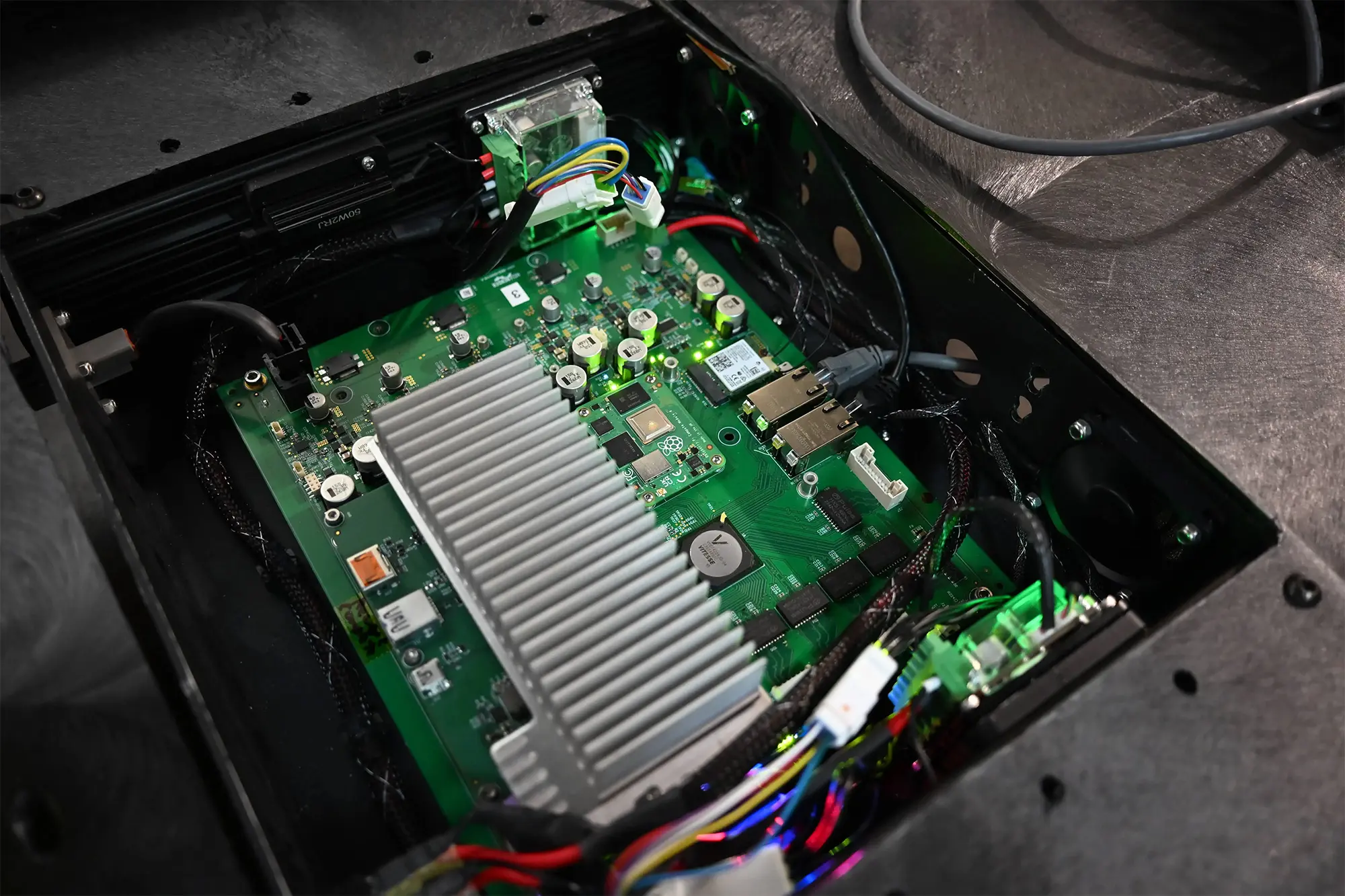
Building edge AI devices means packing a lot of compute power into a small form factor. Heat is an unavoidable byproduct of that compute power, and so every device must be designed to move that heat off of the device as efficiently as possible to allow the device to function properly throughout its lifetime. For devices like Hellbender’s Stereo Camera system — which runs a Raspberry Pi CM5 alongside a Hailo-8 AI Accelerator — that challenge influenced just about every decision from concept through assembly.
How Much Heat are we Dealing with?
Step one of thermal management is figuring out just how much heat needs to be managed, and in what environments.
While finite element analysis software produces sophisticated thermal models, it also costs tens of thousands of dollars. At Hellbender, we prioritize empirical measurements of our major heat-producing elements – the Raspberry Pi CM5 and Hailo 8 AI accelerator – to get a reliable estimate of how much heat we need to dissipate. Aside from saving costs and engineering time, empirical testing compensates for the different levels of thermal data vendors provide, since some give comprehensive information on thermal dissipation and others don’t.
There are three main components to empirical testing:
Software: We use common programs like stressng to stress all CPU cores, GLMark to stress the VideoCore VII Processor on the CM5, and run a continuous inference loop on the Hailo 8. Because our stereo camera is completely open for users to develop on it, we want to push the system to the limit ahead of time.
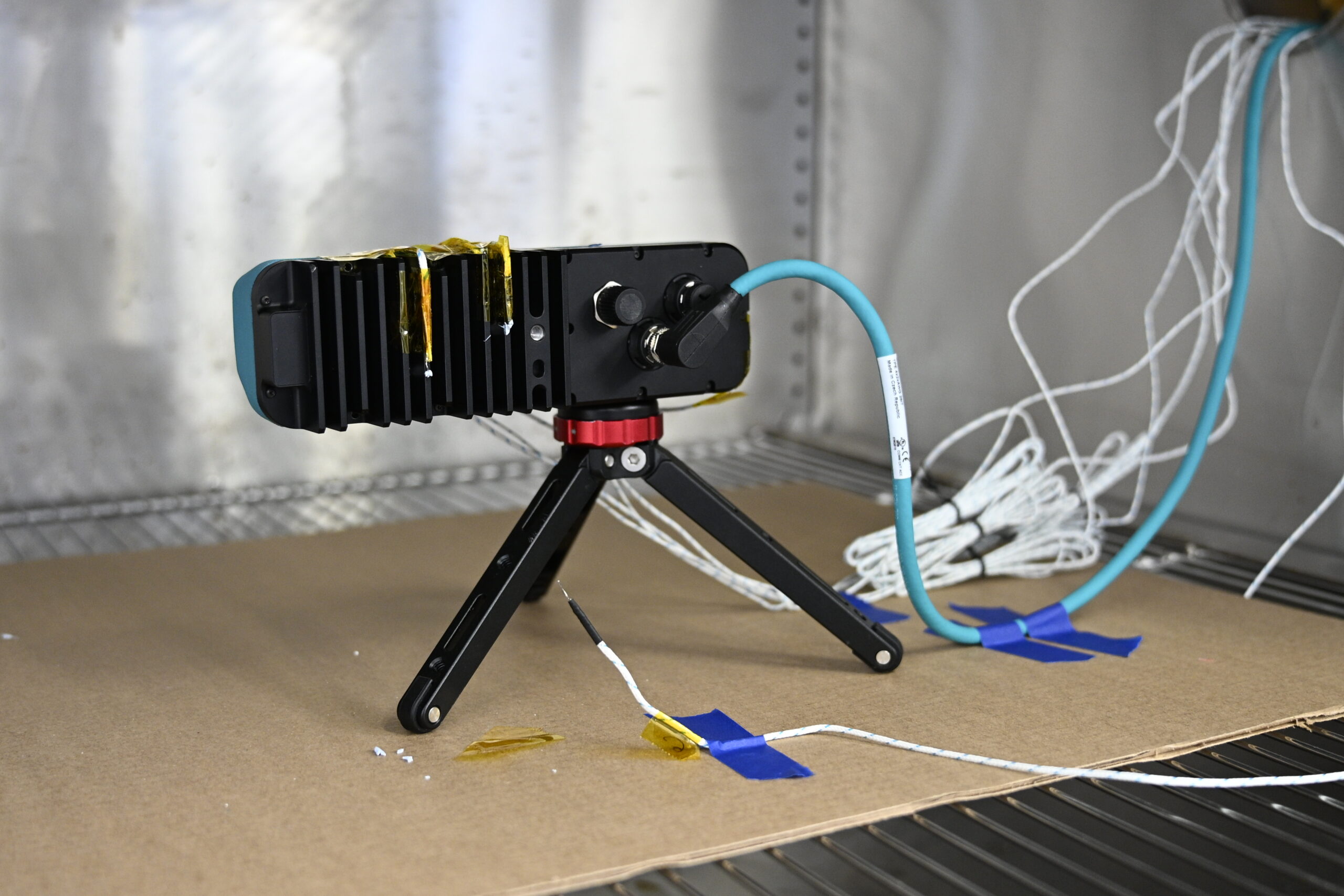
Instrumentation: We rely on a mix of internal component temperatures and strategically-placed thermocouples to fully characterize dissipated heat from the devices.
Thermal Loading: We can approximate the heat generation of our devices from their datasheets and size comparable electrical resistive heaters to verify a design. This helps to unblock early testing if our intended system electronic design is not yet available for integration.
Fortunately, passive cooling is easy to extrapolate out to different ambient temperatures, so this early testing gives us a great approximation of how our device will perform in different environments. At Hellbender, this method has consistently produced accurate predictions through later stage thermal analysis and validation.
Materials and Manufacturing Choices
With the baseline thermal output characterized, design and manufacturing decisions begin to take shape. On the design front, heat sink geometry is well-understood – there are rules of thumb for base thickness, fin height and width that optimize for natural convection, and free online calculators to help guide those decisions. Design decisions also take into account how the device will be oriented and mounted from the start. Heat sink materials present different opportunities and constraints – we typically go with an aluminum alloy that’s anodized black, which increases emissivity to help radiate heat off the device. When passive cooling is the only option, every bit of heat transfer helps.
Choice in manufacturing method adds another layer of complexity to thermal management. Depending on quantity and price point, casting, CNC machining, or cold forging each might make more sense, and each comes with different properties for thermal conductivity, design constraints, and more. For example, die casting is a very common manufacturing method for a heat sink or heat dissipative enclosure, but requires high volume to make sense, while CNC machined parts – better for lower quantities – is higher cost.
Perception System Assembly
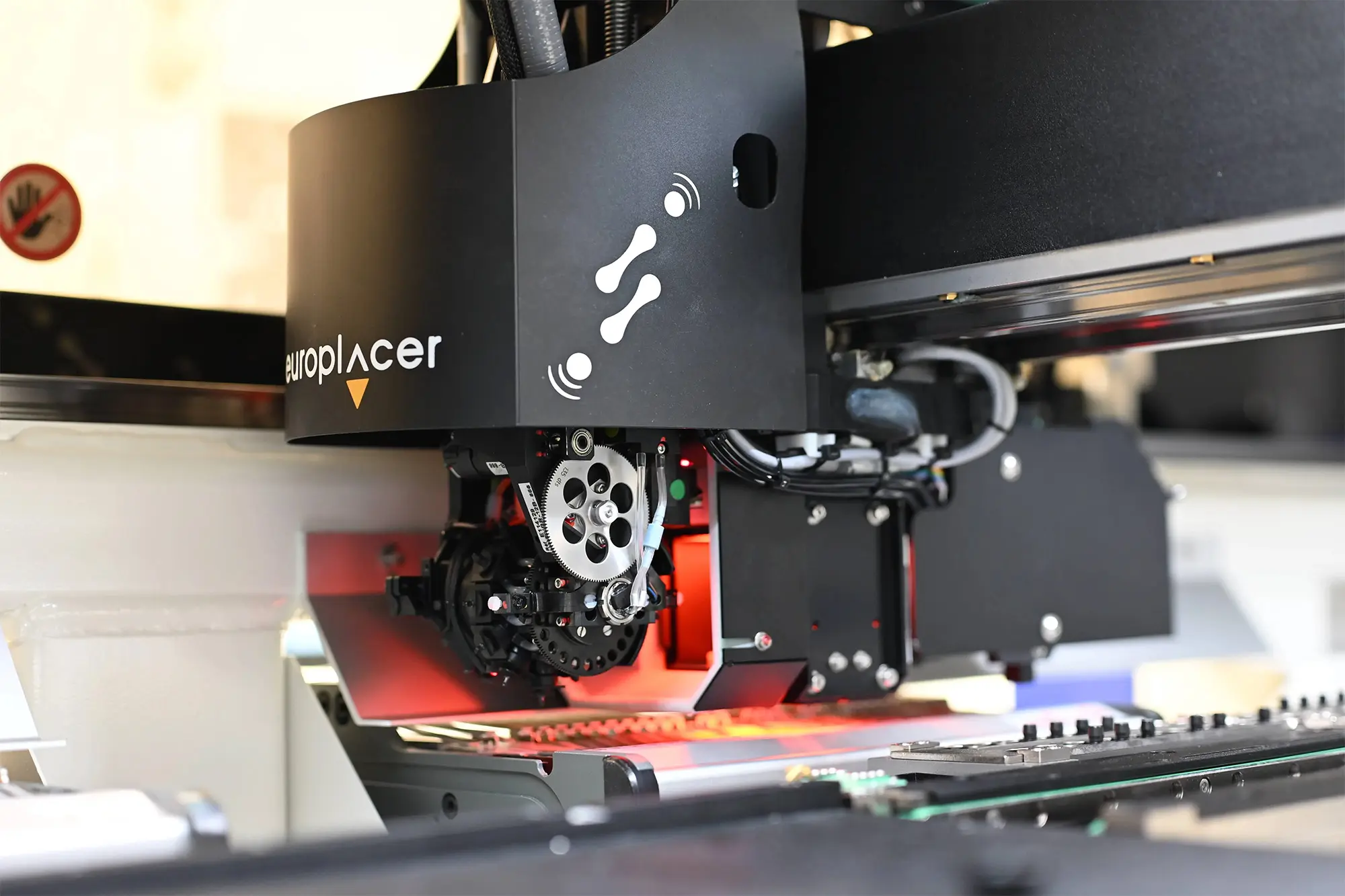
Once characterization, design, and component manufacturing is complete, most of the thermal management has been done, but assembly – particularly for vision systems like the Hellbender Stereo Camera – still presents opportunities to optimize heat transfer without impacting performance. A good example of this is the choice in conductive material that connects heat producing elements like the CM5 and Hailo 8 to the heat sink.
There are lots of options for bridging the gap between processors and heat sink like gap pads and thermal grease, but each has its own costs. For example, gap pads require compression to conduct heat, but too thick and they will damage processor chips, too thin and they won’t effectively conduct heat away. Thermal gap filler, however, is the material of choice for vision products for several reasons. Thermal gap filler can be applied via robotic work cell, making application consistent and low cost; it also is applied in liquid form and cures to a caulk-like consistency which doesn’t flex the circuit board, maintaining imager alignment; finally, all materials are tested to verify that they do not off-gas inside the camera, which keeps all optical components clean and functioning as intended. Like the rest of the design and development process, even device assembly presents options to control thermal management.
An instrumented stereo camera in thermal testing towards later stages of development. While thermocouples gather external temperatures, the Hailo 8 and CM5 also report internal temperatures.
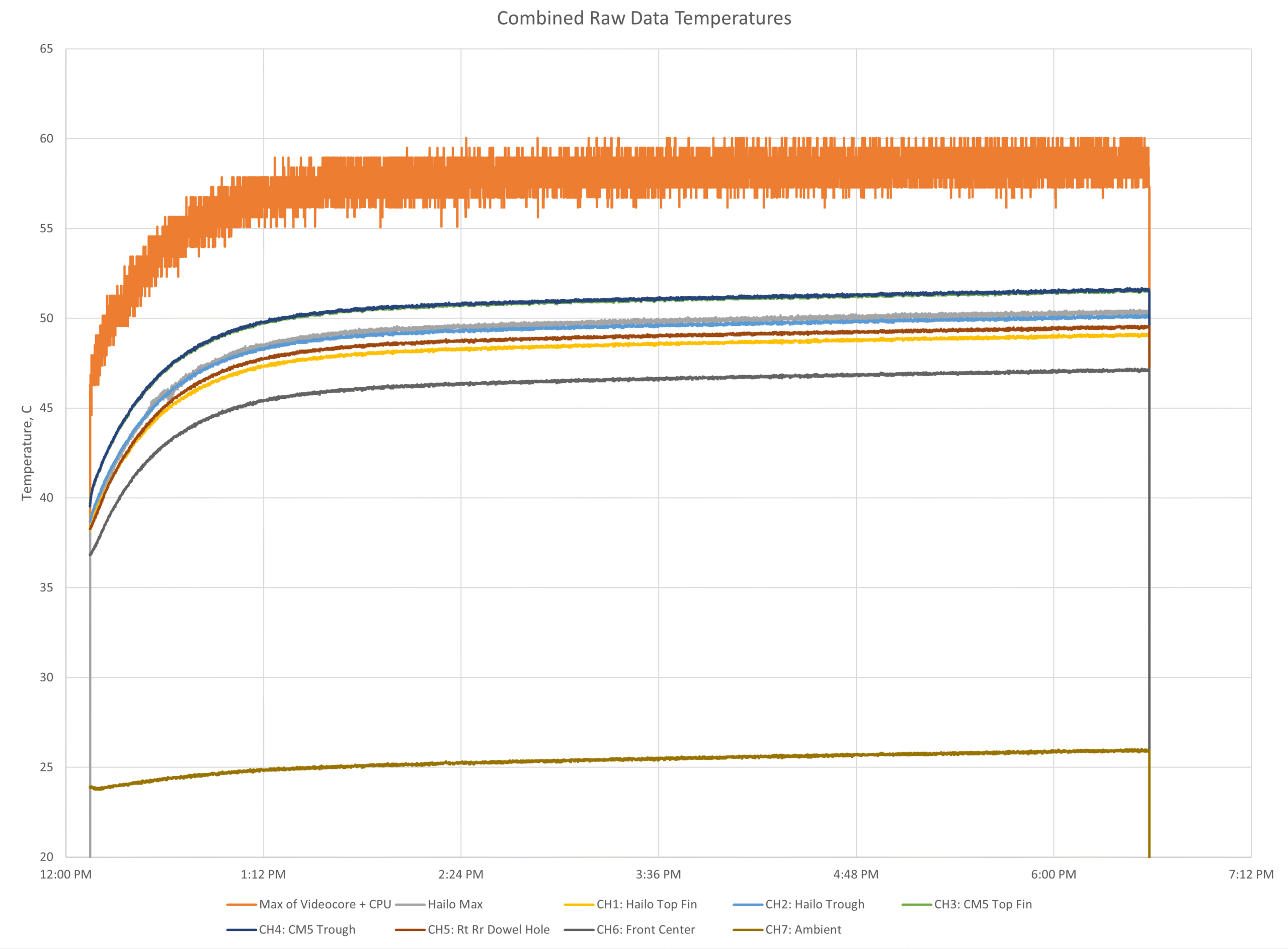
Temperature data tracing transient to steady state temperatures. We focus more on steady state for validating durability in longer deployments.
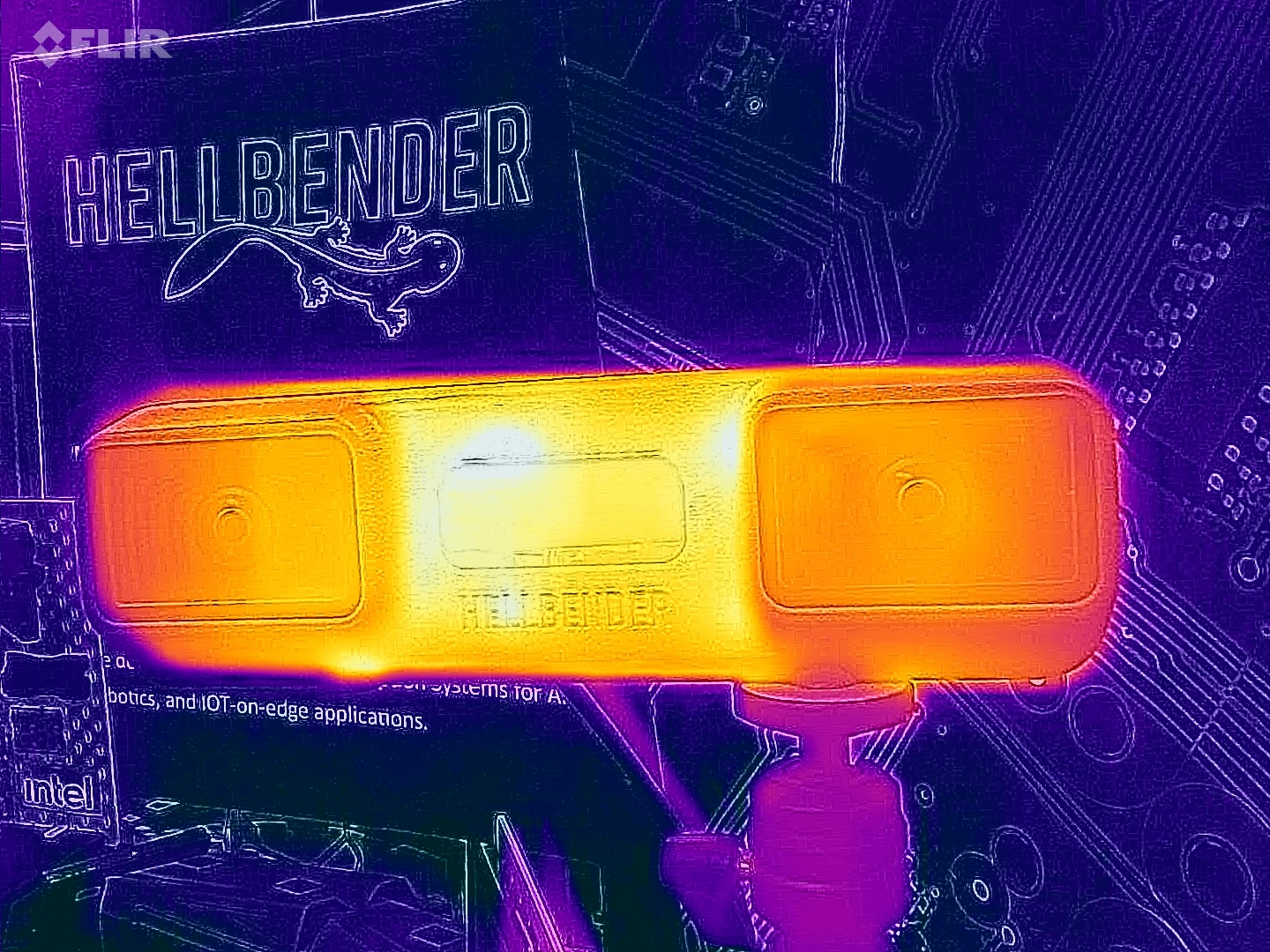
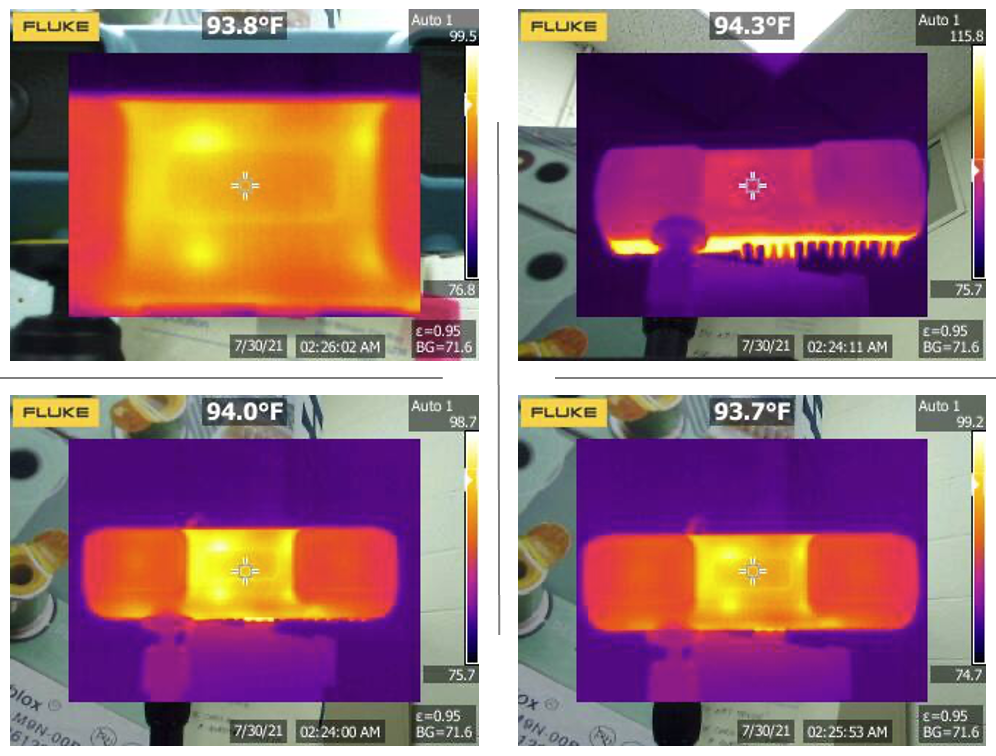
Infrared imaging can give exact temperatures, but it also helps visualize where and how heat spreads through a device from any orientation.
Infrared images show temperatures at different parts of the stereo during operation.
Thermal Management Done Right
Edge devices have many cost, performance, security, and reliability advantages over deploying devices in the field that rely on cloud-based compute, but that doesn’t come without design challenges. The lack of active cooling means that when building devices like the Stereo Camera, Hellbender must weave thermal management into every stage of development. Getting that right is the product of decades of robotics experience among the Hellbender team, and it’s what allows us to ship devices that perform reliably in the field, across a wide range of demanding real-world conditions, over and over again.