Why hellbender builds its products with raspberry Pi hardware
Building Embedded Devices from Scratch
Building edge AI products from scratch means making a lot of hardware decisions — and some matter more than others. The compute platform you choose shapes everything from thermal management and supply chain to the end user’s developer experience. At Hellbender, whether we’re building for intense industrial or light commercial use cases, we keep coming back to the same platform: Raspberry Pi.
Open Access
One of the first things we look for in a compute platform is how easy it is to get up and running — not just for our engineering team, but for the developers who will ultimately build on top of our products. Raspberry Pi clears that bar with very little friction.
Raspberry Pi OS is freely available, and the Raspberry Pi Imager tool makes flashing a device straightforward, but Raspberry Pi also allows its devices to be flashed with custom operating systems when necessary. As a design partner, Hellbender also has access to Raspberry Pi’s technical and applications team; that’s a benefit that Hellbender passes on to its customers in the speed and quality of its development.
While many hardware suppliers build in artificial restrictions to limit a user’s ability to build software outside their ecosystem, Raspberry Pi continues to pioneer a model of open development.
Secure Supply Chain
Supply chain reliability is a make-or-break factor for any hardware product company, especially those building platform devices for other businesses to build off of. Over the last few years, COVID factory shutdowns and surging demand for memory have made that abundantly clear.
Raspberry Pi takes a different approach from most silicon vendors. Their Compute Module line, for example, is designed with long production horizons in mind; the CM5 is committed to be sold and supported through at least 2036. That ten-plus year runway is not the norm in the embedded compute space, but it means that Hellbender can design products around the CM5 today and be confident that the supply chain behind it will still be there many years into the product’s lifecycle.
That kind of commitment is more than peace of mind. It means we can quote multi-year supply agreements, build in procurement buffers without worrying about sudden obsolescence, and pass that stability on to customers who need it.
The Best Bang for our Buck
Cost matters at every layer of a hardware product — compute, memory, connectivity, and the BOM underneath all of it. Raspberry Pi has historically offered strong price-to-performance, and while RAM pricing has pushed system costs up across the industry (a trend that’s not unique to Raspberry Pi), the core modules still deliver strong value relative to the competition.
At Hellbender, the modules we reach for most often are the CM4, CM5, and the RP2350 microcontroller. The Compute Module 4 and 5 are workhorses — they give us the processing headroom to run demanding workloads, and they sit at a price point that makes our product economics work. The RP2350 is especially compelling for applications where you need low-power control logic: it packs a dual-core Arm Cortex-M33 and a dual-core RISC-V processor into a chip that costs less than a dollar. The performance per dollar is hard to beat anywhere in the market.
When we’re designing a new product, the ability to build around a platform that’s both capable and cost-effective gives us more room to invest in other parts of the product — the enclosure, the optics, peripherals and more. Raspberry Pi hardware is what helps us get there.
Support from Every Direction
No hardware platform exists in isolation. What surrounds it — the libraries, the forums, the tutorials, the support infrastructure — matters as much as the specs when you’re building real products on a deadline.
Raspberry Pi has one of the largest and most active embedded hardware communities in the world. The official Raspberry Pi Forums are a legitimate engineering resource — not just beginner Q&A, but deep technical threads covering edge cases, driver issues, and real-world deployment challenges. When our team runs into something unusual, there’s a good chance someone else has already documented it.
Beyond the forums, the official documentation is thorough and consistently updated, and Raspberry Pi’s GitHub repositories give direct access to drivers, OS tooling, and hardware specs. Raspberry Pi also operates a Product Information Portal, which centralizes datasheets, compliance documents, and product notices across the full hardware catalog. When we need to pull together documentation for a customer or a certification process, it’s all in one place.
The combination of official support infrastructure and a robust user community means our engineers spend less time hunting for answers and more time building. For a company like Hellbender — where development speed is a competitive advantage — that makes a big difference.
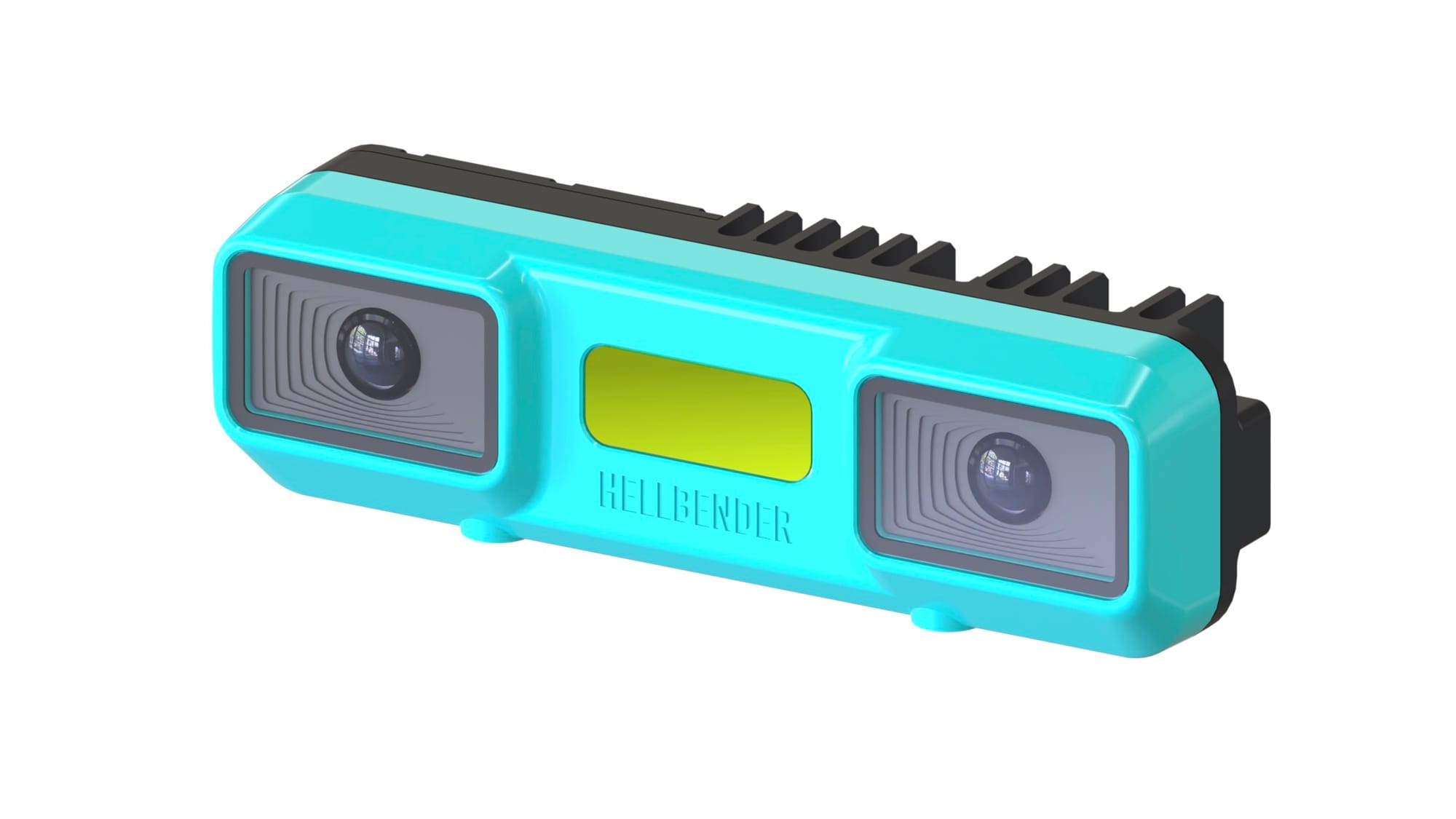
Using Raspberry Pi hardware allows Hellbender to extend that open access to its customers, who can develop on the Stereo Camera's unrestricted debian-based operating system.
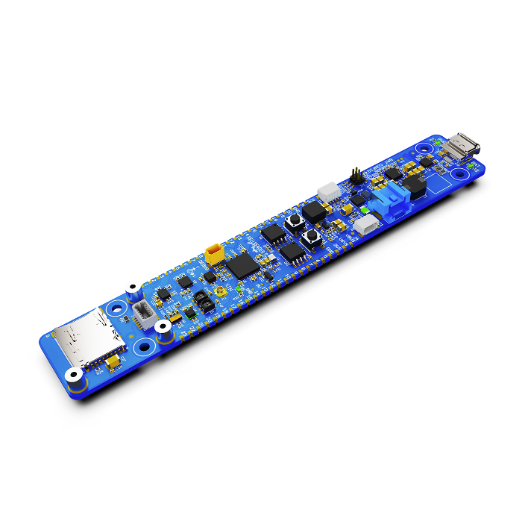
Hellbender has used the RP2350 Microcontroller in so many products that we've built and now sell our own RP2350 dev board to help expedite prototyping.
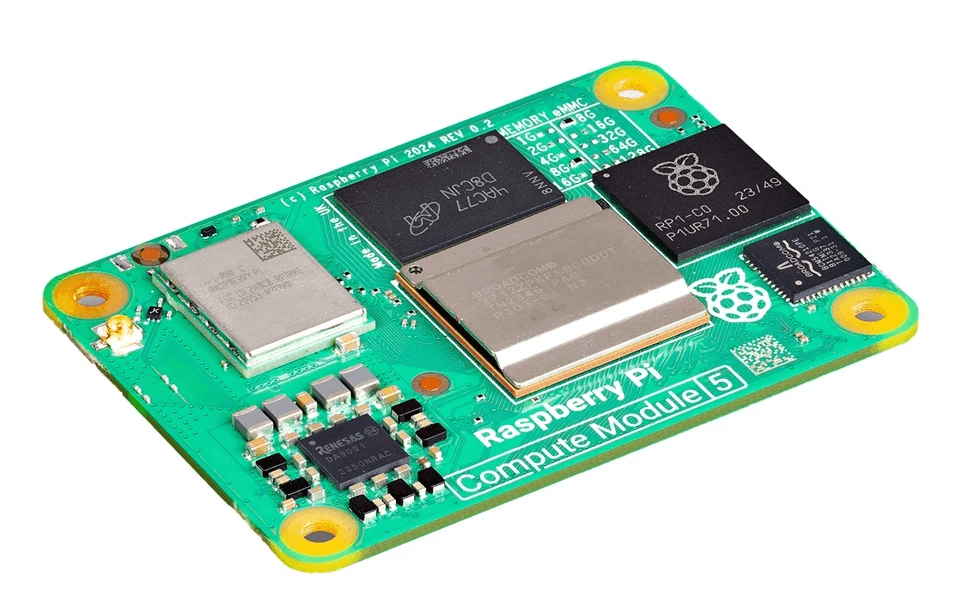
The Raspberry Pi CM5 is the workhorse behind many Hellbender products. It provides powerful and efficient compute in a small form factor.
Aside from Raspberry Pi's robust public support channels, Hellbender's status as an official Raspberry Pi Design Partner means Hellbender and its customers benefit from access to the Raspberry Pi technical and application teams.
The Platform We Keep Coming Back To
There’s no single reason Hellbender builds with Raspberry Pi — there are many, and they all reinforce each other. Open access makes development fast. A secure supply chain makes production predictable. A strong price point keeps our economics viable. And a massive developer community means we’re never building entirely alone.
When we’re evaluating platforms for a new product, we could go in any direction. We keep landing on Raspberry Pi because it checks every box that matters for the kind of hardware we build.